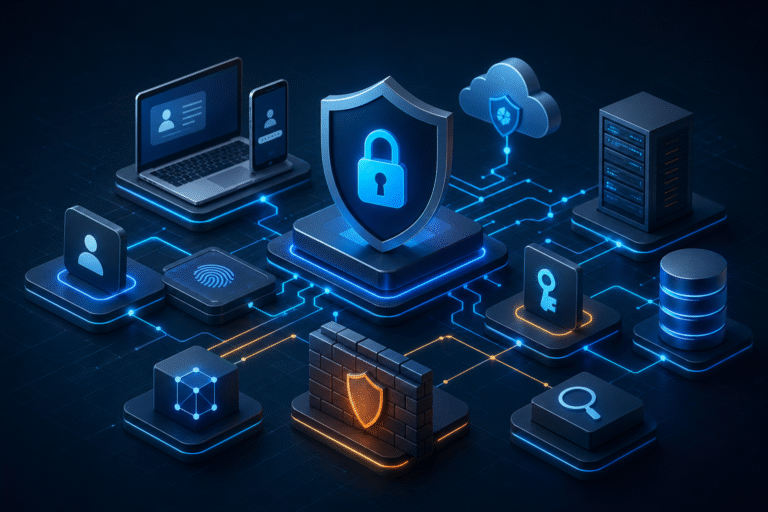
Introduction
As cyber threats grow more complex and frequent, organizations must rethink how they protect critical systems. AI Security Operations (AISOps) introduces intelligent agents and automation into cybersecurity workflows, enabling faster detection, analysis, and response to attacks. By combining machine learning, predictive analytics, and automated remediation, AISOps reduces reliance on manual monitoring while improving accuracy and efficiency. High-quality threat data, integrated intelligence, and adaptive systems form the foundation of a resilient security posture. Teams can also enhance their understanding of emerging risks using references such as this cybersecurity reference guide, ensuring both operational readiness and strategic insight in today’s fast-paced digital landscape.
1. Understanding AISOps and Its Growing Need
AI Security Operations (AISOps) is now an essential framework for organizations defending digital environments against evolving cyber threats. Unlike traditional reactive approaches, AISOps leverages intelligent automation and predictive systems to detect, analyze, and mitigate risks in real time. These systems reduce manual workloads while improving response accuracy. The importance of quality threat information is highlighted in this cybersecurity reference guide, which helps teams understand critical vulnerabilities and response strategies. By integrating AISOps, organizations can create more resilient infrastructures, reduce operational delays, and maintain confidence in automated decisions while adapting to rapidly changing cyber landscapes.
2. Intelligent Threat Detection with Machine Learning
AISOps employs machine learning to enhance threat detection by analyzing vast volumes of data from endpoints, network traffic, and user activity. Unlike static rule-based systems, these models identify anomalies without prior knowledge of attack signatures, enabling early detection of unknown threats. By continuously learning from historical and real-time data, smart agents refine detection accuracy while minimizing false alerts. With automated identification and adaptive learning, AISOps ensures faster, more accurate responses, reducing potential damage and enabling organizations to act on threats immediately.
3. Automated Incident Response and Risk Containment
One of the key advantages of AISOps is automated incident response. Smart agents can isolate affected endpoints, restrict access, block suspicious IPs, or reset compromised accounts without waiting for human intervention. These automated actions accelerate threat containment, reduce risk exposure, and relieve analysts from repetitive tasks. Structured learning programs, like a complete path for ethical hacking skills, support the human side of AISOps by providing teams with the knowledge to validate and supervise automated decisions. Over time, AI-driven response improves continuously, offering a scalable and reliable mechanism for protecting critical systems while maintaining operational efficiency and compliance.
4. Threat Intelligence and Data-Driven Insights
AISOps strengthens threat intelligence by aggregating data from multiple sources such as system logs, cloud applications, device telemetry, and external feeds. Machine learning models analyze patterns, classify threats, and prioritize actions for security teams. This creates actionable insights that transform raw data into meaningful decision-making support. Organizations applying AISOps can move from reactive monitoring to predictive defense, increasing operational efficiency and minimizing vulnerabilities across complex digital infrastructures.
5. Human-AI Collaboration and Ethical Oversight
While AI automation drives speed and accuracy, human oversight remains crucial for strategic and ethical governance. Analysts review AI-generated alerts, refine automation policies, and provide contextual understanding that machines alone cannot deliver. Hybrid collaboration ensures responsible implementation, compliance with regulations, and avoidance of errors or biases. This partnership maximizes operational efficiency while preserving human judgment, ultimately creating more resilient and accountable cybersecurity systems.
6. The Future of Autonomous Cyber Defense
The future of AISOps lies in fully autonomous defense ecosystems capable of detecting, analyzing, and responding to cyber threats with minimal human input. Continuous learning, predictive modeling, and self-healing network capabilities will become standard, allowing organizations to anticipate and neutralize attacks in real time. This trend aligns with insights shared in this analysis on the future of hacking, highlighting emerging practices and the increasing role of AI in cybersecurity. By adopting AISOps today, organizations position themselves to defend against tomorrow’s threats with speed, accuracy, and adaptive intelligence, establishing a new benchmark for secure, automated cyber operations.
Conclusion
AI Security Operations (AISOps) represents a paradigm shift in cybersecurity, combining intelligent agents, automation, and predictive insights to create highly adaptive defense systems. By leveraging machine learning, structured intelligence, and automated response mechanisms, organizations reduce risk exposure, improve operational efficiency, and strengthen resilience against evolving threats. Human oversight remains critical for ethical governance, but AISOps empowers teams to focus on high-value security decisions rather than routine monitoring. Integrating these systems today positions organizations for long-term cybersecurity success, ensuring a proactive, intelligent, and robust defense strategy that meets the demands of the modern digital landscape.
About the Author