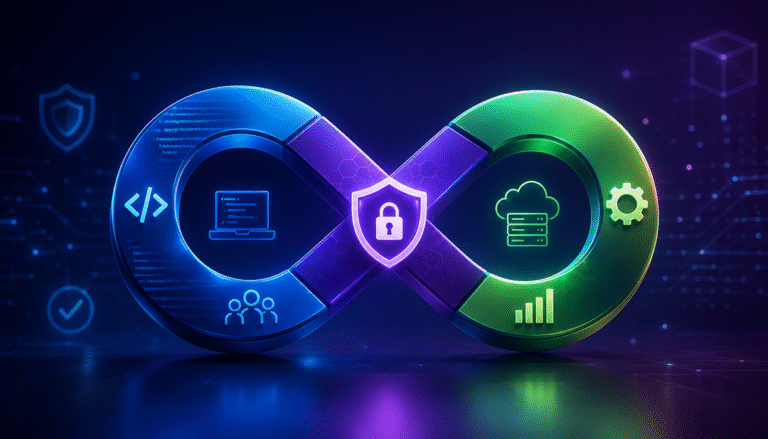
Infrastructure as Code (IaC) has evolved from a DevOps convenience into a foundation for modern cloud engineering. As 2025 unfolds, the next generation of IaC tools leverages automation, artificial intelligence, and policy-driven frameworks to simplify deployment, scaling, and compliance. This transformation marks a new phase where human input becomes guidance rather than micromanagement. Businesses adopting smarter IaC models are achieving shorter release cycles, fewer configuration errors, and optimized cloud costs. In this blog, we’ll explore five key ways IaC is becoming more intelligent, efficient, and aligned with the automation-first future of digital infrastructure management.
1. AI-Driven Configuration Management
The future of IaC depends heavily on intelligence-based automation. Tools like Terraform and Pulumi are integrating AI to predict optimal configurations and identify redundant code. These systems can detect inefficiencies, recommend better architecture, and even self-heal broken deployments. Developers no longer need to manually update YAML files or scripts for every minor change. Instead, AI-powered assistants continuously learn from previous deployments to improve outcomes. This smart automation minimizes errors while reducing time to market. To deepen your understanding of automation in DevOps, explore AI in Cloud Automation on the Eduonix Blog — a guide to building AI-optimized workflows.
2. Policy as Code: Enforcing Security at Scale
Security and compliance are no longer post-deployment tasks — they’re now embedded directly into the IaC lifecycle through Policy as Code. Frameworks like Open Policy Agent (OPA) and HashiCorp Sentinel let organizations define rules that automatically validate infrastructure changes before deployment. This ensures consistency across teams and prevents misconfigurations that lead to vulnerabilities. The next wave of IaC tools integrates these policies dynamically, offering automated rollback and remediation when violations occur. Developers can enforce governance without slowing delivery, merging compliance into CI/CD pipelines seamlessly. It’s a proactive approach that balances speed and security — two critical pillars of cloud success.
3. Autonomous Deployment Pipelines
Traditional deployment pipelines rely on static scripts that can quickly become outdated. The modern approach involves self-adjusting systems that evolve with application needs. Autonomous IaC pipelines analyze metrics in real time, adjusting provisioning or scaling parameters dynamically. For instance, infrastructure can automatically expand during high-traffic windows or optimize storage as data patterns shift. This shift from reactive to predictive deployment allows businesses to achieve consistent uptime and performance. Engineers now focus on defining business logic while systems handle orchestration. For a deeper dive into this, explore DevOps Automation Masterclass — a practical Eduonix Course on automating your full CI/CD process.
4. Cross-Platform Orchestration and Portability
In the next era of IaC, vendor lock-in is becoming obsolete. Engineers are designing configurations that can deploy across AWS, Azure, Google Cloud, and even hybrid environments without rewriting the entire codebase. This is made possible by orchestration frameworks that interpret configuration intent rather than syntax. Developers specify what they need, and the orchestration layer determines how to achieve it across multiple providers. This flexibility reduces operational costs and simplifies multi-cloud management. The future is about portability and abstraction, empowering teams to deploy once and scale anywhere. Such innovations are setting a new standard for cloud infrastructure agility.
5. Continuous Learning and Self-Healing Infrastructure
Imagine infrastructure that doesn’t just follow instructions — it learns from experience. The next generation of IaC systems incorporates feedback loops that monitor resource performance, detect anomalies, and self-correct without human intervention. These systems combine monitoring tools with reinforcement learning models to optimize operations. When a configuration error or performance issue arises, the system identifies root causes and executes predefined fixes. Over time, this creates a continuously improving infrastructure ecosystem. It’s not just automation — it’s intelligence in action. As described in the CodeCondo Blog on self-healing systems mark the next major milestone in software reliability.
Conclusion: The Autonomous Infrastructure Future
The next era of Infrastructure as Code is defined by intelligence, adaptability, and resilience. Automation is no longer just a convenience — it’s a competitive necessity. By embracing AI-driven management, policy-based governance, and cross-platform orchestration, organizations can unlock unprecedented efficiency and innovation. Engineers will increasingly shift from configuration writing to strategic oversight, guiding systems that learn and evolve on their own. The convergence of AI and IaC signals a future where infrastructure becomes an autonomous partner — one that not only executes instructions but continuously improves to meet dynamic business demands.
About the Author