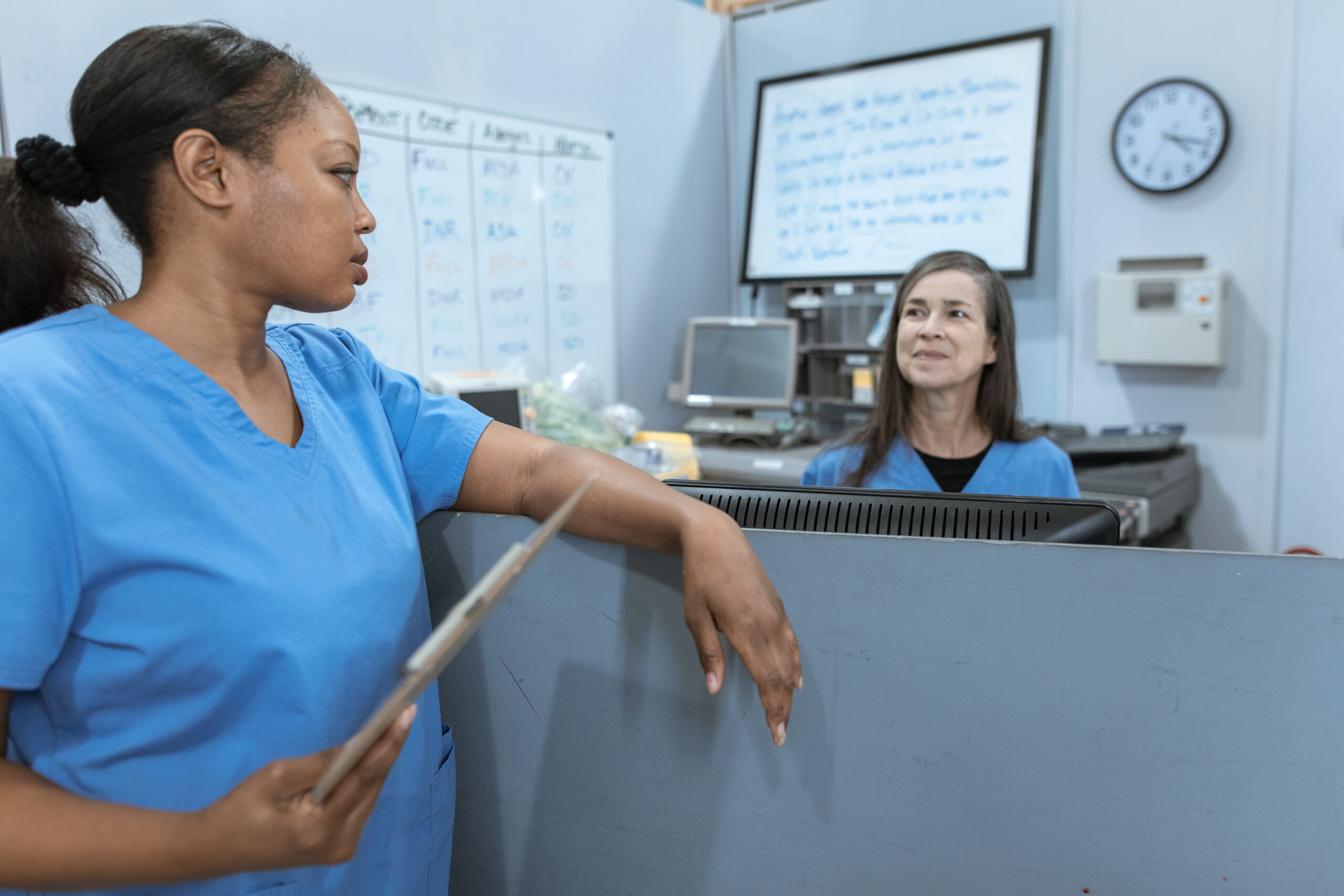
Ask a practising nurse what they remember most from their training, and chances are they won’t start with a lecture. They’ll remember a patient. Maybe it was the first difficult conversation they had. Maybe it was a shift that seemed to go wrong from the moment it began. Or maybe it was a senior clinician who quietly stood back at exactly the right moment, giving them enough room to work things out while still being close enough to step in if needed.
Those experiences have a way of staying with you because they’re the moments where healthcare starts feeling real. The textbooks are still important, but they slowly stop being the only place you look for answers. Instead, you’re learning from people, situations and decisions that don’t always fit neatly into a textbook chapter heading. Some of the most valuable lessons happen in moments you could never have planned for.
Learning Beside Someone Who’s Already Walked the Path
Every placement gives you a chance to see what the profession actually looks like once the classroom is behind you. Watching an experienced clinician move through a busy day can be surprisingly eye-opening because you’re absorbing far more than assessments or treatment decisions. You’re watching how they speak to patients who are frightened, how they calm family members with endless questions and how they continue thinking clearly when several priorities arrive at once.
Finding the right nurse practitioner preceptor placement can make an enormous difference because the person guiding you shapes far more than your technical skills. Through such services, students are matched with experienced professionals who help bridge the gap between academic learning and everyday clinical practice. Along the way, you begin noticing things that rarely appear in study material. How someone explains difficult news. When they choose to pause instead of speaking. Why one question opens an entire conversation while another brings it to an abrupt end. Those observations become part of your own practice over time, often without you even realising it’s happening.
Confidence Doesn’t Arrive All At Once
Confidence has a habit of arriving without introduction, which is probably why so many students don’t notice it’s happening until much later. One day you just answer a patient’s question without second-guessing yourself. A supervisor trusts you with a little more responsibility than they did the week before. You finish a shift and suddenly realise your first instinct was the right one more often than not. None of those moments feel particularly intense while you’re living them, but together they begin changing how you see yourself. You’re no longer trying to remember every page of a textbook but rather starting to trust your own judgement.
A supportive preceptor understands this better than anyone. Good mentors don’t expect perfection; they expect questions, hesitation and the occasional mistake because that’s part of becoming better. Sometimes they’ll even let you wrestle with a problem for a minute before stepping in. Not because they’re testing you, but because they know those moments often leave the strongest impression.
Some lessons are explained while others have to be lived to get the full effect.
Every Clinician Teaches Something Different
Spend enough time working alongside different practitioners and you’ll quickly see that there isn’t one perfect blueprint for becoming an excellent nurse practitioner.
One clinician builds trust almost instantly. Another notices details everyone else overlooked. Someone else has a calmness that settles an entire room before they’ve even started speaking. None of them practise in exactly the same way, yet all of them are effective for different reasons.
That’s one of the unexpected benefits of placement. You stop looking for one person to copy and begin collecting qualities you’d like to develop yourself. Over time, those small observations blend together into a style that feels natural to you instead of borrowed from somebody else.
Curiosity plays a big role here. Students who ask thoughtful questions usually walk away with far more than clinical knowledge. They leave with a clearer understanding of the kind of healthcare professional they hope to become.
Learning What Textbooks Can’t Fully Explain
There’s something about meeting real patients that changes the way information settles in your mind. A condition you’ve studied for months suddenly has a face, a family and a story attached to it. You begin to appreciate that healthcare rarely exists in isolation because medical history, social circumstances, cultural beliefs and individual preferences all influence the decisions being made.
That’s difficult to appreciate fully until you’re standing in the middle of it. Clinical placements create opportunities to connect knowledge with lived experience, and those connections tend to last much longer than memorising another chapter before an exam.
Even difficult days become valuable. Sometimes you’ll leave a shift replaying conversations in your head, wondering whether you could have handled something differently. Oddly enough, those reflections often become some of your strongest learning moments because they encourage you to think beyond what happened and focus on what you’ll do next time.
Asking Questions Is Part of Becoming Better
Almost every experienced clinician has a story about a question they were nervous to ask early in their career. Most of them are glad they asked it anyway.
Healthcare continues changing, and no one reaches a point where learning simply stops. New research appears, treatment recommendations evolve and every patient brings something slightly different into the room. Resources from organisations like the Australian Commission on Safety and Quality in Health Care help healthcare professionals stay informed as evidence and best practices continue to develop, but that willingness to keep learning usually starts much earlier.
The students who grow the most aren’t necessarily the ones with all the answers. They’re paying attention, staying curious and recognising that every shift offers another opportunity to learn something they didn’t know yesterday.
The Moment You Begin Thinking Like a Nurse Practitioner
For most students, knowing when everything finally came together was simple. There wasn’t a certificate waiting at the end of the day. No one announced that they’d crossed some invisible line. They just noticed they were approaching situations differently. Instead of searching for the “correct” answer straight away, they began looking at the patient in front of them, weighing different possibilities and trusting the judgement they were gradually building through experience.
That’s what a meaningful clinical placement really offers. Yes, you gain practical skills. Yes, your confidence grows. But somewhere between your first nervous day and your final shift, something less obvious starts taking shape. You stop feeling like someone who’s learning to become a nurse practitioner. You begin thinking like one.
About the Author