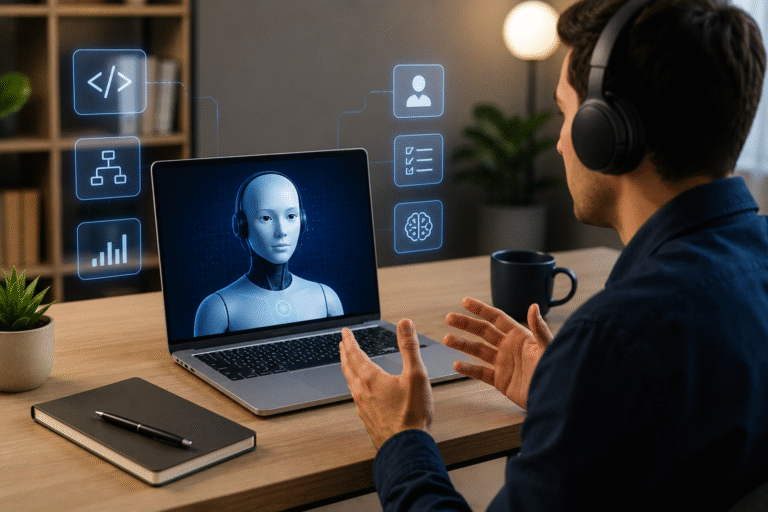
Voice assistants like Siri and Alexa have become integral to our daily lives, helping us set reminders, control smart devices, and answer questions on the go. But how do these virtual assistants understand and respond to our commands? The answer lies in Natural Language Processing (NLP), the technology that enables machines to interpret and generate human language. In this blog, we’ll explore how NLP powers voice assistants, the challenges involved, and what the future holds for this transformative technology.
What is Natural Language Processing (NLP)?
Natural Language Processing (NLP) is a branch of artificial intelligence that focuses on enabling computers to understand, interpret, and respond to human language. It combines linguistics, computer science, and machine learning to process spoken or written input. For voice assistants like Siri and Alexa, NLP is the backbone that allows them to:
-
Convert speech to text
-
Understand the meaning behind words
-
Generate relevant responses
NLP has evolved significantly since its inception, with early rule-based systems giving way to advanced machine learning models. Today, NLP enables voice assistants to handle complex queries with remarkable accuracy.
How Voice Assistants Process Your Voice
Voice assistants follow a multi-step process to understand and respond to your commands. Here’s a breakdown of how NLP makes it happen:
Step 1: Speech Recognition
When you say, “Hey Siri, set a timer for 10 minutes,” the assistant first converts your spoken words into text using Automatic Speech Recognition (ASR). This involves:
-
Acoustic Models: Analyzing sound waves to identify phonemes (sound units).
-
Language Models: Predicting word sequences based on grammar and context.
ASR ensures that even varied accents or speech patterns are accurately transcribed.
Step 2: Natural Language Understanding (NLU)
Once the speech is converted to text, Natural Language Understanding (NLU) kicks in to extract meaning. This involves:
-
Intent Detection: Identifying the user’s goal (e.g., setting a timer).
-
Entity Recognition: Extracting key details (e.g., “10 minutes”).
-
Contextual Understanding: Handling follow-up questions like “Make it 15 minutes instead.”
NLU allows assistants to interpret ambiguous or incomplete queries by leveraging context.
Step 3: Response Generation
After understanding the command, the assistant generates a response using Natural Language Generation (NLG). This could involve:
-
Crafting a verbal response (e.g., “Timer set for 10 minutes”).
-
Retrieving data from external APIs (e.g., weather updates).
-
Executing tasks like sending a message or playing music.
This seamless process ensures voice assistants deliver accurate and helpful responses.
Key NLP Technologies Behind Siri and Alexa
Several advanced NLP technologies power the capabilities of Siri and Alexa:
Machine Learning and Deep Learning
Voice assistants rely on neural networks trained on massive datasets to process speech and language. These models learn patterns in human speech, improving accuracy over time. For example, deep learning helps Siri recognize diverse accents and Alexa understand complex commands.
Named Entity Recognition (NER)
Named Entity Recognition (NER) identifies specific information like names, dates, or locations. When you ask Alexa, “What’s the weather in New York tomorrow?” NER extracts “New York” and “tomorrow” to fetch the correct forecast.
Sentiment Analysis
Some assistants use sentiment analysis to detect the user’s tone or emotion. For instance, if you sound frustrated, Siri might respond with a calming or empathetic tone.
Dialogue Management
Dialogue management ensures coherent conversations by tracking context. If you ask Alexa, “Play some music,” followed by “Make it louder,” dialogue management links the commands to adjust the volume of the music.
Challenges in NLP for Voice Assistants
Despite their advancements, voice assistants face several challenges in NLP:
Accents and Dialects
Users speak with diverse accents and dialects, which can confuse speech recognition systems. Developers train models on varied datasets to improve inclusivity, but gaps remain.
Ambiguity in Language
Human language is often vague or context-dependent. For example, “Play the top hits” could refer to different genres or time periods. NLP systems must infer intent accurately.
Noise and Environmental Factors
Background noise, like a TV or traffic, can interfere with speech recognition. Advanced noise-cancellation algorithms help filter distractions, but noisy environments remain a challenge.
Privacy Concerns
Voice assistants process sensitive data, raising privacy concerns. Companies like Apple and Amazon implement encryption and anonymization, but balancing functionality with privacy is an ongoing issue.
Real-World Examples: Siri vs. Alexa
Let’s look at how Siri and Alexa apply NLP in real-world scenarios:
Siri
Siri excels at personal tasks like setting reminders, sending texts, or answering questions. For example, saying “Remind me to call Mom at 7 PM” triggers NER to identify “Mom” and “7 PM,” while NLU ensures the reminder is set correctly.
Alexa
Alexa shines in smart home control and e-commerce. Asking “Turn off the living room lights” prompts Alexa to use NLU to identify the device and execute the command. Similarly, “Add milk to my shopping list” leverages NER to update the list.
While Siri focuses on personal productivity, Alexa emphasizes home automation and shopping, showcasing their unique NLP strengths.
The Future of NLP in Voice Assistants
The future of NLP in voice assistants is exciting, with several trends on the horizon:
-
Conversational AI: Assistants will engage in more human-like, multi-turn conversations, understanding nuanced emotions and intents.
-
Multimodal Inputs: Combining voice with visuals (e.g., screens or cameras) will enable richer interactions, like showing recipes while explaining steps.
-
Personalization: Assistants may adapt to individual users’ speech patterns and preferences, offering tailored experiences.
-
Ethical AI: Developers will prioritize transparency and fairness, addressing biases in NLP models and enhancing user trust.
As NLP advances, voice assistants will become even more intuitive and indispensable.
Conclusion
Natural Language Processing is the magic behind Siri and Alexa’s ability to understand and respond to your voice. From speech recognition to dialogue management, NLP enables these assistants to process complex commands and deliver seamless experiences. Despite challenges like accents and privacy concerns, ongoing advancements promise a future where voice assistants are smarter, more personalized, and ethically sound.
Ready to explore the power of voice assistants? Try new commands with Siri or Alexa and share your experiences in the comments below!
About the Author