1. The Rise of Adaptive Learning in Modern Education
The education industry is undergoing a massive transformation, thanks to AI-driven personalization. Adaptive learning with AI is redefining how students learn, teachers teach, and institutions deliver value at scale. Instead of one-size-fits-all curriculums, AI tailors each lesson to a learner’s needs, boosting engagement and retention. Through advanced analytics and smart recommendations, educators can identify gaps and deliver support exactly when it’s needed. This data-driven approach empowers students to learn efficiently and educators to optimize content delivery for real impact. The result is a system that evolves dynamically, improving continuously with every learner interaction.
2. How AI Adapts Learning in Real Time
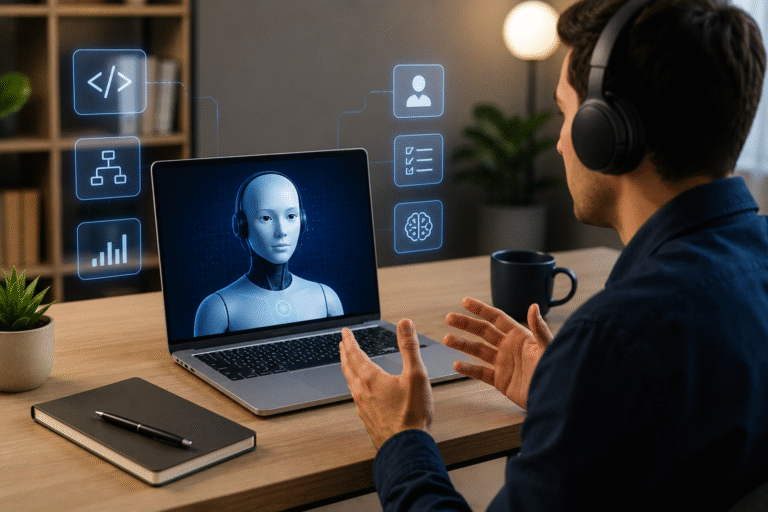
AI-powered learning platforms use algorithms that adapt in real time to student performance. When a student struggles, the system automatically adjusts content difficulty or revisits foundational concepts. Similarly, fast learners are challenged with advanced topics sooner. This intelligent pacing not only personalizes the journey but also makes education more equitable by meeting every learner where they are. Tools like interactive quizzes, performance dashboards, and behavior tracking reinforce this adaptive loop, ensuring continuous improvement and engagement. Such responsiveness makes the process seamless and empowering for both learners and instructors.
3. Empowering Educators with Data-Driven Insights
Institutions benefit immensely from AI-enabled personalization. Educators can leverage analytics to understand where learners face challenges and improve their teaching strategies. It also helps in curriculum design — identifying what content resonates best and what needs refinement. By combining student data, cognitive modeling, and predictive analytics, schools and edtech platforms can offer tailored pathways that evolve over time. Moreover, AI provides feedback loops that improve instructional quality and enable data-informed decisions, revolutionizing how learning outcomes are measured and achieved.
4. Scaling Education Without Losing Personalization
Adaptive learning systems go beyond personalization; they create learning ecosystems that scale effortlessly. Platforms powered by AI can manage thousands of learners simultaneously while maintaining individualized attention. For instance, intelligent tutoring systems or recommendation engines suggest relevant resources like the Artificial Intelligence for Beginners course to enhance skill development. This scalability ensures that quality education isn’t limited to a few but accessible to many, irrespective of geography or resources. As technology advances, such systems will form the backbone of inclusive global education.
5. Integrating AI in Lifelong and Professional Learning
The integration of adaptive learning with AI into professional development and higher education is also accelerating. Platforms are now embedding AI-driven modules to offer real-time assistance, simulate problem-solving scenarios, and provide continuous feedback. Educators too can upskill with programs like the AI vs Machine Learning to design AI-driven lessons. The benefits go beyond automation — they enhance creativity, critical thinking, and real-world application. Learners are no longer passive consumers of information; they’re active participants in their own growth journeys.
Conclusion: The Future of AI-Driven Education
In a rapidly evolving world, the synergy between human intelligence and machine intelligence will define the next generation of learning. AI will not replace teachers — it will empower them. The adaptive learning model ensures that every learner gets the right content at the right time, making education more human, not less. To explore similar innovations in education technology, check out the AI-Powered Marketing Trends blog that highlights emerging methods shaping tomorrow’s classrooms. Personalized learning isn’t the future — it’s already here, intelligently scaling across the globe.
About the Author